

Lot n° 10
Estimation :
8000 - 12000
EUR
Result without fees
Result
: 8 000EUR
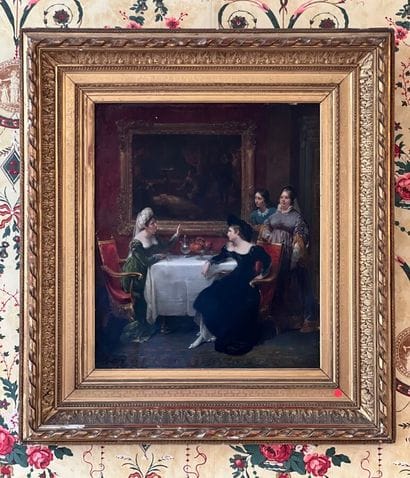
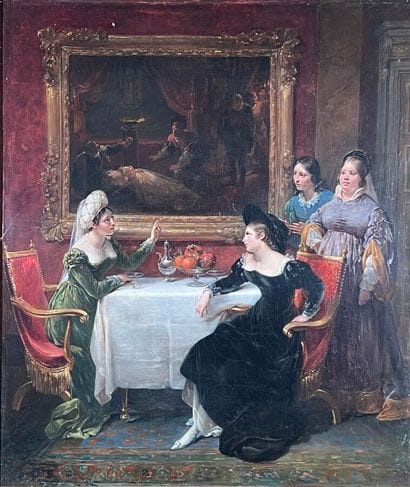
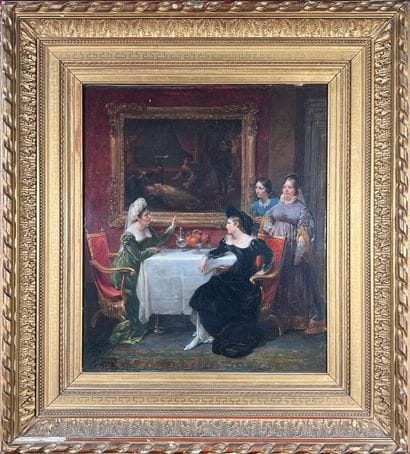
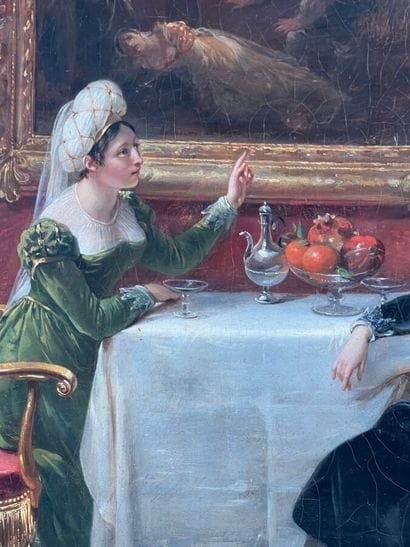
Hortense HAUDEBOURT - LESCOT (1784 - 1845) - Lot 10
Hortense HAUDEBOURT - LESCOT (1784 - 1845)
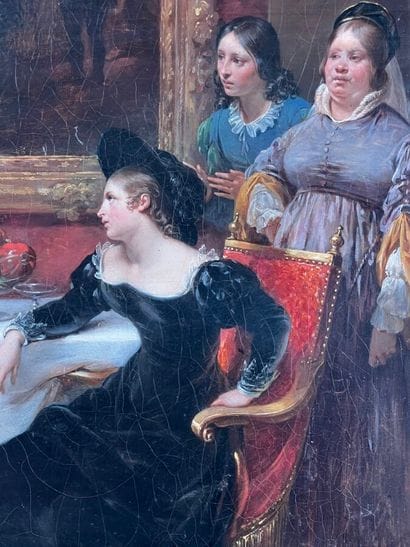
Explanation of the Marriage of Vengeance painting (Gil Blas)
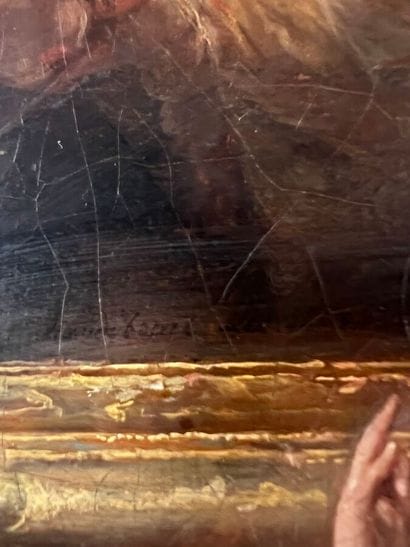
Oil on canvas, signed in the center.
54.5 x 46 cm
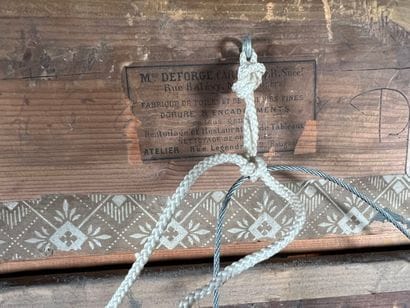
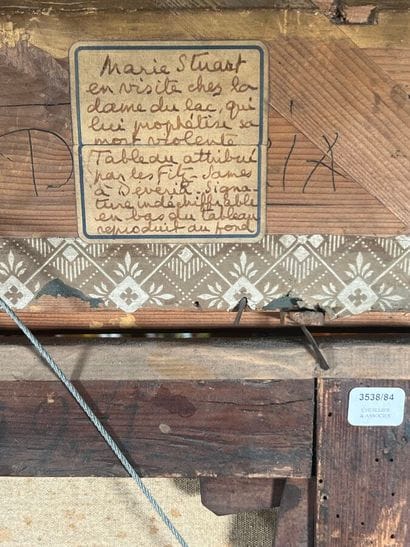
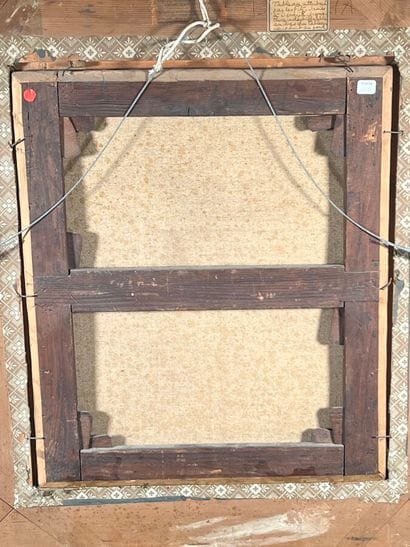
Label on back: Chez Schroth, marchand de tableaux, rue de la Paix à Paris, en 1827
Frame in wood and gilded stucco with acanthus leaves (missing parts).
Provenance:
- Former collections of the Dukes of Fitz-James and by marriage.
Exhibition:
- Salon de 1827, Paris, n°536.
Bibliography :
- Antony Béraud, Annales de l'Ecole des Beaux-Arts, Paris, 1827, p. 158
Hortense Haudebourt-Lescot was a pupil of Guillaume Guillon-Lethière (1760-1832), who headed the Académie de France in Rome and was a member of the Academia di San Luca. She made her debut at the Salon in 1810. Married to architect Pierre Haudebourt (1788-1849) in 1820, she was active in Rome and Paris.
She is best known as the official painter of Marie-Caroline de Bourbon-Siciles (1798-1870), Duchess of Berry. Two works by this artist appear in the 1822 book Galerie de son altesse royale Madame la duchesse de Berry, by Féréol Bonnemaison, painter and curator of the Duchesse's gallery of paintings, which underlines the influence of her stay in Italy and the taste of the time for the picturesque life of the Neapolitan people. This same taste can be seen in the figure of Jeune paysanne en prière in the Cherbourg museum, or in La Leçon de lecture in the Musée des Beaux-Arts in Angers. At the Salon des artistes français in 1814, she exhibited "La confirmation par un évêque grec dans la basilique de sainte Agnès hors les murs à Rome" (Confirmation by a Greek bishop in the basilica of Saint Agnes outside the walls in Rome), now in the Musée des beaux-arts in Rouen.
In 1837, Louis-Philippe (1773-1850) commissioned François de Lorraine, Duc de Guise, receiving the surrender of Spanish troops after the capture of Thionville, June 23, 1558 (Versailles, Musée national des châteaux de Versailles et de Trianon), and in 1838, Pope Eugène III receives the ambassadors of the King of Jerusalem in 1145 (Versailles, Musée national des châteaux de Versailles et de Trianon), for the Musée historique de Versailles.
Numerous museums (Château-Thierry, Compiègne, Toulouse, Dijon, Bordeaux) possess works that testify to the variety of his production (history painting, genre scenes, portraits). The Musée du Louvre holds four paintings and a set of twelve drawings, purchased by the museum in 1925.
(Virginie Desrante, Ministry of Culture website)
My orders
Sale information
Sales conditions
Return to catalogue